

Pet Allergies: What We Do for Hives vs. Life-Threatening Reactions
It happens in a flash: one moment your dog is chasing a lizard in the yard, and the next their face looks puffy and swollen. Or your usually calm cat is suddenly scratching frantically and won’t settle. These moments leave you wondering whether you’re dealing with a minor itch or something that needs emergency care right now. Allergic reactions in pets range from mild hives to life-threatening emergencies, and the difference often comes down to how quickly symptoms progress and how many body systems are involved. Knowing the warning signs helps you act calmly and fast when it matters most.
At Guam Pet Hospital in Hagåtña, our team provides routine wellness and urgent care when symptoms escalate. We focus on general medicine and diagnostics and can assist after hours, including emergency home visits for critical cases. If you’re worried about new or worsening allergy signs, reach out for guidance so we can help with next steps.
What Triggers Pet Allergies in Guam’s Climate?
Allergies happen when the immune system overreacts to something that wouldn’t normally cause harm, creating symptoms that range from itchy skin to breathing difficulties. On Guam, warm weather and greenery keep allergens active year-round, which means there’s no real “off season” for sensitive pets.
Common trigger categories include:
- Environmental allergens: Pollen, dust mites, mold spores, and grasses. Guam’s humidity supports mold growth and plants bloom often, so symptoms can persist well beyond a typical allergy season.
- Insect bites and stings: Bees, wasps, ants, fleas, and mosquitoes. Flea saliva is one of the most common causes of intense itching.
- Food proteins: Chicken, beef, fish, dairy, or certain grains can trigger skin or digestive symptoms that persist year-round.
- Medications: Certain antibiotics, anti-inflammatories, or vaccines can occasionally cause reactions.
Knowing your pet’s likely exposures helps identify patterns early. Routine checkups through our wellness services let us spot trends and build practical prevention around your pet’s lifestyle.
What’s the Difference Between Hives and Anaphylaxis?
Not all allergic reactions look or act the same, and timing significantly impacts severity.
| Reaction Type | What Happens | How Fast | Urgency |
| Hives | Raised, itchy welts; mild facial puffiness | Minutes to hours | Monitor; call for guidance |
| Respiratory signs | Sneezing, coughing, watery eyes | Hours to days | Schedule evaluation |
| Anaphylaxis | Collapse, breathing difficulty, vomiting, pale gums, shock | Minutes | Emergency: seek care immediately |
Anaphylaxis in dogs and anaphylaxis in cats can cause vomiting, diarrhea, difficulty breathing, sudden collapse, and pale gums. In both species, blood pressure can crash and airways can swell within minutes.
The key distinction: hives mainly affect the skin and comfort, while anaphylaxis impacts the whole body and can be fatal without urgent treatment. However, hives can progress to anaphylaxis so should still be monitored closely. If symptoms involve multiple body systems at once and are progressing rapidly, treat it as an emergency and contact our team immediately.
Which Symptoms Should You Never Ignore?
Understanding common allergy symptoms helps you decide whether to monitor at home or head to the clinic.
Signs to monitor closely:
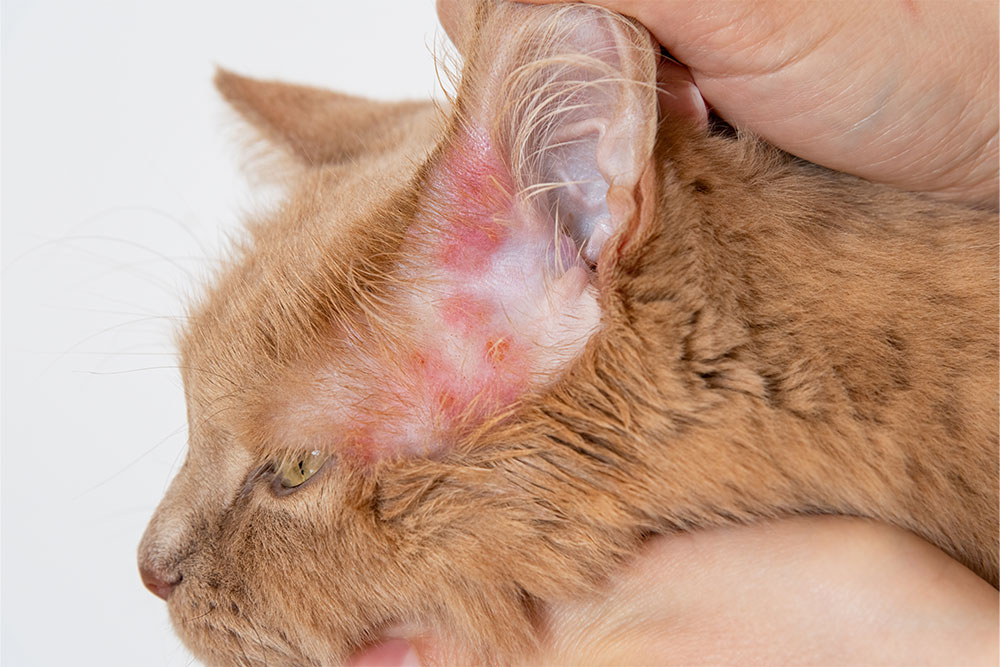
- Itchy, bumpy skin or raised welts
- Red, watery eyes or sneezing
- Ear scratching or head shaking
- Mild vomiting or soft stool
- Restlessness or behavior changes
Emergency red flags requiring immediate care:
- Trouble breathing, wheezing, or noisy, labored breaths
- Any open-mouth breathing in cats, which is always abnormal and concerning
- Collapse, extreme weakness, or confusion
- Rapidly expanding facial or throat swelling
- Pale or blue-tinged gums
- Repeated vomiting or watery diarrhea with lethargy
Trust your instincts. If something feels wrong, it probably warrants a call. If you see emergency signs, contact us for immediate guidance so we can mobilize support.
What Should You Do at Home During a Reaction?
In the first moments, focus on keeping your pet calm, removing the suspected trigger, and gathering helpful details for your vet. If breathing or alertness is affected, skip all of this and head to emergency care immediately.
Steps you can take right away:
- Move your pet away from the suspected trigger into a cool, quiet area.
- Gently rinse the coat with cool water to remove surface allergens or stinging insect residue. For stings, scrape the stinger away rather than squeezing.
- Use an Elizabethan collar if your pet is scratching or chewing intensely to prevent self-injury.
- Do not give human medications unless your veterinarian has specifically instructed you for your pet. Some antihistamines are safe at certain doses, but others contain ingredients toxic to pets.
- Take photos of skin changes and note timing, possible exposures, and any foods or medications given recently.
If symptoms are mild and your pet is stable, set up a same-day appointment so we can evaluate and advise safe treatment.
When Does a Reaction Become an Emergency?
Head to emergency care when you see rapidly spreading swelling (especially around the face or throat), worsening breathing, symptoms involving multiple body systems at once, collapse, or symptoms continuing despite removing the trigger.
What to expect when you arrive:
Treatment focuses first on stabilizing your pet with oxygen support, IV access, and close monitoring. Medications are tailored to severity and may include antihistamines and corticosteroids for moderate reactions, IV fluids to support circulation, and epinephrine for severe anaphylaxis. Once stabilized, we determine whether home recovery or hospitalization is safer.
Most mild to moderate reactions resolve quickly with appropriate care, while severe cases may need closer monitoring. Our after-hours protocol ensures you can reach our team for triage and direction, including emergency home visits for critical situations. Contact us immediately if you’re seeing urgent signs.
How Can You Prevent Future Allergic Reactions?
For long-term control, focus on keeping allergens off the skin, preventing parasites, and working with your vet team to manage underlying sensitivities.
Everyday prevention:
- Grooming: Regular grooming with baths and brushing reduces allergen load on the coat, which is especially helpful in Guam’s pollen-heavy environment.
- Parasite control: Flea allergy dermatitis can be triggered by a single bite. Guam’s climate favors parasites year-round, making year-round parasite prevention
- Emergency preparedness: For pets with known severe reactions to insect stings, ask about keeping epinephrine at home so you’re prepared if a reaction happens far from the clinic.
Advanced management options:
For pets with chronic or recurring allergies, additional tools can make a significant difference. Immunotherapy gradually exposes the immune system to identified allergens, decreasing reaction severity over time. Medications like Apoquel help control itching and inflammation, while Cytopoint targets itch signals for longer-lasting relief. Our team can help determine which approach fits your pet’s specific triggers and needs.
For tailored prevention suited to Guam’s environment, our wellness services can map out the right plan.
Can Diet and Home Changes Help Reduce Flare-Ups?
Yes. Targeted changes at home can significantly reduce how often and how severely allergies flare.
For suspected food allergies, elimination diet trials using a novel or hydrolyzed protein for 8 to 12 weeks are the most reliable way to identify triggers. Feed only the prescribed diet and treats during the trial so results are clear. Improvement during the trial followed by symptom return when reintroducing the old diet confirms a food allergy.
At home:
- Vacuum with a HEPA filter and wash bedding in hot water weekly
- Maintain moderate humidity to limit dust mites and mold (challenging in Guam’s climate, but air conditioning and dehumidifiers help)
- Bathe regularly with topical therapies for allergic skin containing omega fatty acids to improve skin condition
- Keep up with ear cleaning using veterinary-approved solutions, since allergies often inflame ear canals and lead to secondary infections
Our medical services and diagnostics can support elimination trials and ensure diet changes are safe and effective.
Should You Worry About Vaccine or Medication Reactions?
True vaccine reactions are uncommon, but planning and monitoring help keep your pet safe. Mild effects like brief soreness, sleepiness, or low-grade fever can occur and often resolve within a day. Concerning signs include persistent vomiting, diarrhea, facial swelling, hives, breathing difficulty, or collapse.
Monitor your pet for 24 to 48 hours after new vaccines or medications and know the patterns of common vaccination reactions so you can act quickly if needed. For pets with a history of reactions, we may space vaccines, pre-medicate, or schedule when you can observe afterward.
Talk with us about your pet’s history so we can personalize vaccine timing as part of our comprehensive wellness care.
Frequently Asked Questions
What’s the difference between hives and anaphylaxis?
Hives are itchy skin welts that are uncomfortable but usually manageable with treatment. Anaphylaxis is a sudden, whole-body reaction involving breathing problems, collapse, or shock that needs immediate emergency care.
When should I go to emergency care versus calling first?
For breathing trouble, collapse, severe facial or throat swelling, pale gums, or persistent vomiting and diarrhea, seek emergency care immediately. For hives, mild swelling, or localized itching, call us first and we’ll advise next steps.
Can I give my pet Benadryl at home?
Never give any medication without veterinary guidance. Some antihistamines are safe at specific doses, but others contain ingredients toxic to pets. Call us and we’ll tell you what’s safe and how much to give for your specific pet.
How do I prevent flea-related allergies?
Maintain year-round parasite prevention and perform regular flea checks. On Guam, fleas stay active all year, so consistent prevention is the best defense.
Could my pet have a food allergy?
Possibly. Diagnosing food allergies requires a strict elimination diet trial lasting 8 to 12 weeks with a novel or hydrolyzed protein diet. Improvement during the trial and symptom return when reintroducing old food confirms the allergy.
You’re Not Alone: Clear Signs, Calm Action, and a Team You Can Trust
Keep the top warning signs in mind: struggling to breathe, collapse, rapidly worsening facial or throat swelling, and unrelenting vomiting or diarrhea all require emergency care. Hives and mild itching still deserve prompt attention if they spread or your pet seems uncomfortable.
At Guam Pet Hospital, we love pets like you do. From sorting out mild hives to managing life-threatening reactions, Dr. Bob and our team are here to guide you with steady hands and clear answers. If your pet is showing concerning signs, contact us for urgent help. If you want to get ahead of allergies for the long term, schedule a visit so we can create a plan that keeps your pet comfortable in Guam’s year-round allergy season.
After-Hours Note for Emergencies
If an urgent reaction happens outside regular hours, call our main number and follow prompts for after-hours assistance. Our team provides emergency guidance and can arrange care, including emergency home visits in critical situations. Come meet our team and let us know how we can help today.




Leave A Comment