

A Practical Guide to Dental Home Care for Dogs and Cats
Dental disease is one of the most common health problems in dogs and cats, and it often progresses silently until the damage is already significant. By the time you notice bad breath, broken teeth, or a reluctance to eat, the underlying gum disease may have been building for months or years. Regular home dental care is one of the most effective things you can do to protect your pet’s teeth and overall health between professional cleanings.
At Guam Pet Hospital, we see the effects of untreated dental disease regularly, and we know that prevention at home makes a real difference. Our team can assess your pet’s current dental health, recommend the right products, and show you techniques that work for your specific pet. Request an appointment or contact us to schedule a dental evaluation or to talk about starting a home care routine.
Why Dental Home Care Has Real Health Consequences
Every time your pet eats, bacteria in the mouth form plaque on tooth surfaces. Within days, that soft plaque mineralizes into tartar, a hard calcified deposit that cannot be removed by brushing. Tartar irritates the gum tissue, creates pockets where bacteria multiply below the gumline, and triggers progressive destruction of the bone and connective tissue that hold teeth in place- called periodontal disease. Over years, this process leads to tooth loss, painful abscesses, and bacteria that can travel to the kidneys, liver, and heart through the bloodstream. Periodontal disease affects the majority of dogs and cats by age three.
Professional dental cleanings under anesthesia address what has already developed, including below the gumline where home care cannot reach. Home care slows what returns after each cleaning. They are partners in a complete dental health strategy, not alternatives.
The Best Tool: Toothbrushing
Why Nothing Beats Mechanical Cleaning
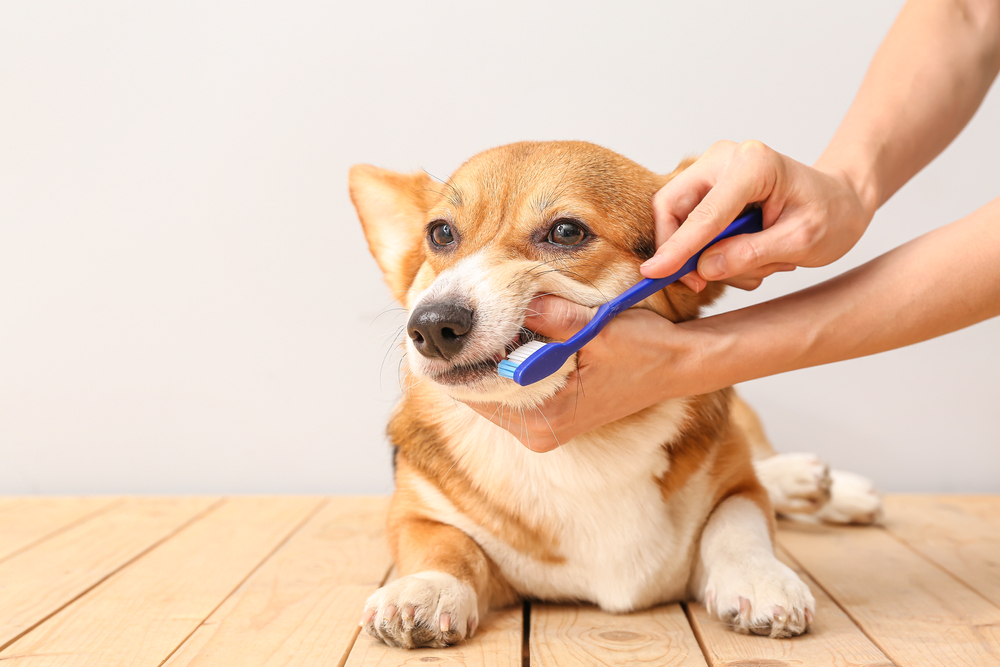
Toothbrushing disrupts the bacterial biofilm on tooth surfaces before it can mineralize into tartar. No chew, additive, or spray replicates this when done consistently. Daily brushing provides the strongest protection; every-other-day brushing still delivers meaningful benefit. Consistency over perfect technique is the right frame of mind.
Introducing the Brush Gradually
The biggest reason home brushing fails is a rushed introduction that creates a negative association the pet never forgets. A slow, patient approach produces a pet who accepts and sometimes enjoys the routine.
- Start with just touch: spend several days gently touching the muzzle and lifting the lips briefly, with a small reward after each session
- Add finger contact: run a clean finger slowly along the outer tooth surfaces and gumline
- Introduce flavor: let your pet taste and lick a small amount of enzymatic pet toothpaste from a fingertip before any brushing begins
- Move to a tool: introduce a finger brush or soft-bristled toothbrush starting at the front teeth only
- Build backward: extend toward the back teeth incrementally, one area at a time, over days or weeks
Cooperative care techniques that use positive reinforcement and choice consistently produce better tolerance than restraint.
For brushing dog teeth, hold the brush at a 45-degree angle toward the gumline and use short circular or back-and-forth strokes. The upper back molars accumulate tartar fastest and deserve focused attention.
For brushing cat teeth, smaller brushes, lighter pressure, and very short sessions work far better than extended attempts. Many cats tolerate brushing better when they feel stable on a firm surface rather than restrained.
Use only pet-formulated toothpaste. Human toothpaste contains fluoride and sometimes xylitol, both of which are toxic to pets.
When Brushing Is Not Realistic: Wipes and Gauze
For pets who genuinely will not tolerate a toothbrush, dental wipes or gauze wrapped around a finger provide friction-based cleaning on accessible surfaces. They cannot reach deep gumlines or the inner surfaces of back teeth the way a brush can, but consistent use is significantly better than no home care.
Wipes work well for front teeth, canines, and the outer surfaces of the cheek teeth. Pairing them with an enzymatic product adds chemical disruption of bacteria alongside the mechanical component. For some pets and households, wipes are not a stepping stone to brushing but the realistic long-term approach.
Our team at Guam Pet Hospital can help you assess whether wipes are the right starting point for your individual pet or the realistic long-term strategy.
Enzymatic Gels, Sprays, and Powders
Enzymatic products work chemically, breaking down bacterial biofilm without physical scrubbing. Enzyme systems like lactoperoxidase and glucose oxidase target the bacterial film at the molecular level. These products can be applied with a finger, brush, or spray, added directly to food, or allowed to coat the teeth when a pet licks them. Many require no rinsing.
Combining enzymatic products with brushing or wipes produces consistently better outcomes than any single approach. For households where brushing is difficult, enzymatic products added to food daily provide ongoing passive protection between any other care that does happen.
Water Additives
Water additives are the most hands-off option available, delivering antimicrobial or enzymatic ingredients with every drink from the water bowl. They require no cooperation from your pet and provide a baseline level of oral protection for pets who resist every other approach.
Keep in mind: water additives cannot remove tartar that has already formed and vary considerably in effectiveness. Introduce them gradually at a lower concentration first to ensure your pet continues drinking normally before committing to full use.
Dental Diets and Chews
Dental diets are formulated with a specific kibble size and texture that requires teeth to penetrate before crumbling, producing mild abrasive cleaning with every bite. Some formulations also contain ingredients that slow tartar mineralization. Like all home care tools, dental diets extend the time between professional cleanings rather than replacing them.
Chews provide mechanical plaque removal through chewing action. The critical safety rule: press your thumbnail firmly into the chew. If it does not leave a dent, it is too hard and risks fracturing teeth. Dangerous chew items including antlers, hooves, and hard nylon bones should be avoided. Safe chew toys flex under pressure.
Edible dental chews provide both mechanical and enzymatic action in a single product. Match the chew size to your pet’s weight, supervise initial sessions, and monitor for gastrointestinal upset in pets with sensitive digestion.
What the VOHC Seal Means
The dental product market is crowded with products making broad claims that are not always backed by evidence. The VOHC (Veterinary Oral Health Council) grants its seal of acceptance only to products that demonstrate measurable plaque or tartar reduction in clinical trials. It applies to chews, gels, water additives, diets, and other products for dogs and cats.
The VOHC seal is the most reliable shortcut when evaluating dental products. Our team at Guam Pet Hospital is familiar with the VOHC-accepted options available and can guide you toward what is most appropriate for your pet’s size, species, and current oral health.
Brands Worth Paying Attention To
The brands in this list are either VOHC-approved, or have products that are trusted by veterinary professionals to be effective.
| Wide Range of Products (Dogs and Cats) | Water Additives (Dogs and Cats) |
| Vetradent Dental Care | HealthyMouth |
| VetriScience Dental Supplements | TropiClean Fresh Breath |
| ProDen PlaqueOff Products | Bluestem Water Additive |
| CET Dental Line (Virbac) |
Dental Products Worth Skipping
Walk down the pet dental aisle and you will find no shortage of sprays, powders, and rinses promising to dissolve tartar and restore a gleaming white smile. If a product claims to remove hardened tartar on its own, that claim is not accurate. Once plaque has mineralized into tartar, no topical product can touch it. Only a professional cleaning under anesthesia removes tartar at and below the gumline. Products that show dramatic before-and-after images of brown teeth turned white are selling results they cannot deliver. Save your money for products with actual evidence behind them, like those carrying the VOHC seal of acceptance.
What Home Care Cannot Replace
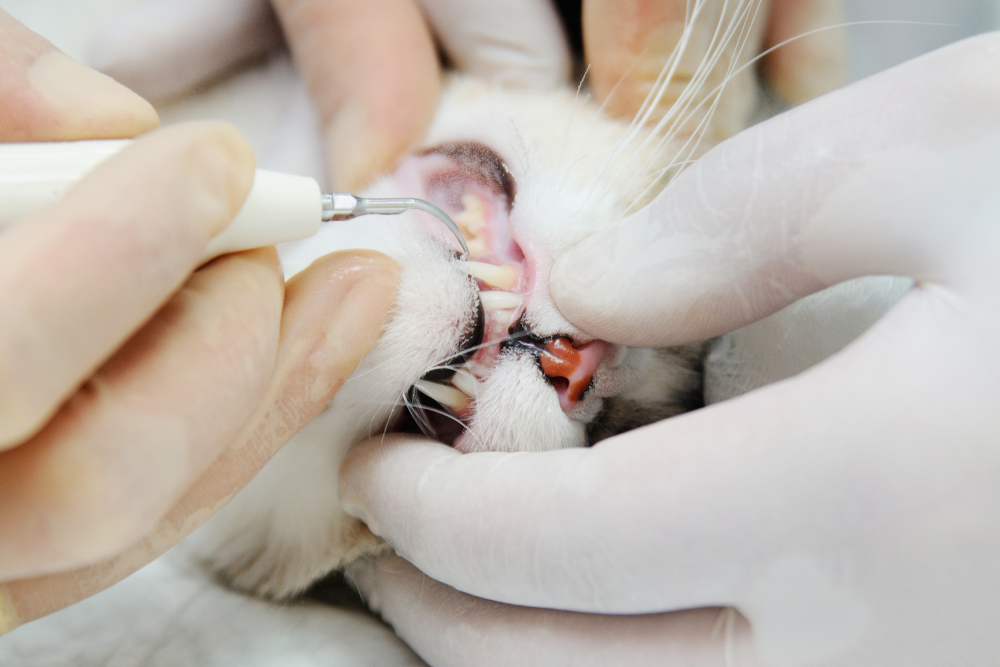
Even thorough daily brushing cannot remove tartar that has already mineralized, and it cannot access the subgingival disease that develops below the gumline. Professional dental cleaning under anesthesia is the only way to scale and polish both above and below the gumline, probe every tooth, take full-mouth radiographs that reveal root and bone pathology, and safely treat or extract compromised teeth.
Anesthesia-free dental risks are worth understanding: procedures without anesthesia address only visible surfaces, leaving the clinically significant subgingival disease entirely untouched. They produce cleaner-looking teeth while the important disease continues progressing.
Home care earns longer intervals between professional cleanings. It does not make professional cleaning optional.
Building a Routine That Holds
The most effective dental routine is one that happens consistently. A few practical strategies:
- Anchor it to an existing habit: brushing right before bed or immediately after the evening meal means it happens without extra thought
- Keep supplies visible: a kit near the feeding area gets used; one in a cabinet does not
- Start smaller than you think you should: 30 seconds of enzymatic gel on the gumlines daily is producing real benefit
- Involve the whole household: a routine that one person maintains but others skip will collapse on busy days
- Make a backup plan: on days you don’t have time to brush, give a dental chew or use a water additive
Any home care effort provides benefit, even when it does not look like a perfect routine every day.
Frequently Asked Questions
How do I know if my pet’s home care is working?
Fresher breath, less visible yellow-brown buildup at the gumline, and healthier-looking pink gum tissue between cleanings are all positive indicators. At your dental evaluation, our team can compare the current tartar level to your pet’s baseline.
My cat hates having their mouth touched. Where do I start?
Put enzymatic toothpaste on food rather than attempting contact. Once they associate the taste with food, move to letting them lick it from a fingertip. Progress to finger contact with the outer lip surface. Move slowly, reward every step, and accept that weeks or months may pass before a brush is tolerated.
How often does my pet need a professional cleaning?
Most dogs and cats benefit from annual professional cleanings. Small breeds and cats often benefit from more frequent care. The state of your pet’s mouth at their last evaluation is the most reliable guide.
Your Pet’s Mouth Is An Investment
Consistent home dental care makes a genuine difference in the long-term health of your pet’s teeth and in the frequency and complexity of professional care needed over their lifetime. At Guam Pet Hospital, we can assess where your pet is now and help you build a routine that fits your pet’s temperament and your schedule.
Request an appointment for a dental evaluation, or explore our full services to see how dental care fits into a complete health program. Reach out with any questions- our team is here to help.





Leave A Comment