

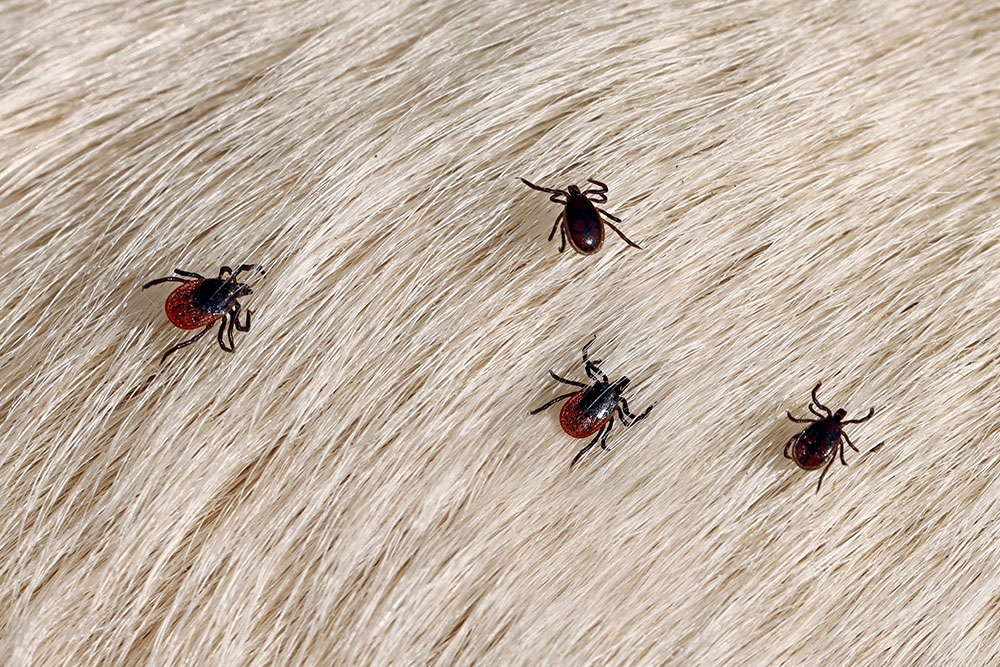
If it feels like every other dog on this island has had a tick problem, the research backs you up. When scientists tested 136 dogs across Guam, 43.4% of them carried at least one tick-borne pathogen in their blood. Nearly half. That is not a scary statistic invented to sell you something; it is simply what ticks do in a place that never gets a winter to slow them down. The good news is that these illnesses are treatable, especially when caught early, and they are largely preventable with year-round tick control and regular screening. The hard part is that most infected dogs look completely fine at first, which is exactly why waiting for symptoms is the wrong strategy here.
At Guam Pet Hospital, tick-borne disease is not a once-in-a-while curiosity; it is part of the island’s baseline, and our wellness and preventive services are built around that reality. We screen for tick-borne pathogens, work through the vague early signs that families often chalk up to a slow week, and help you pick a preventive that actually fits your pet, your yard, and the way you live here. If you have found a tick on your dog or cat, or your pet has seemed a little off lately, request an appointment and we will take a proper look.
What Every Guam Pet Family Should Know About Ticks
- Ticks carry several different illnesses rather than just one, and a single bite can pass along more than one pathogen at the same time.
- Research on Guam dogs found that nearly half carried a tick-borne pathogen, with anaplasmosis, hepatozoonosis, ehrlichiosis, and babesiosis leading the list.
- Guam has no cold season to interrupt tick activity, so prevention here is a year-round job rather than a seasonal one.
- Most infected pets show no signs early on, which is what makes routine screening worth doing even when your pet seems perfectly healthy.
How Does a Tick Actually Give a Dog or Cat a Disease?
A tick has to attach and feed before it can pass anything along, and for most tick-borne pathogens that takes a stretch of hours rather than seconds. That delay is the whole reason prevention works: a product that kills or repels a tick quickly, or a tick you find and remove promptly, often stops transmission before it ever starts.
Ticks do not jump or fly. They wait on vegetation, latch onto whatever brushes past, then find a spot with thin skin and settle in to feed. Different ticks carry different diseases, and tick populations keep expanding into places they were once uncommon, so regional risk is a moving target rather than a fixed fact.
Guam has its own version of this story. Warm, humid conditions year-round mean no seasonal die-off, and the tick most tied to dogs (the brown dog tick) is comfortable in homes, kennels, and yards rather than just out in the jungle. Local guidance on whether your dog is a tick’s best friend is worth reading, because on this island the exposure risk is not limited to hiking trails and boonie stomps. It follows dogs home.
Dogs are diagnosed with tick-borne illness far more often than cats, though both can be exposed. If your dog spends any time outdoors here, assume exposure is possible and plan accordingly. Our team can talk through what your pet’s specific routine means for their risk.
What Did Researchers Find When They Tested Guam’s Dogs?
They found that tick-borne infection is common here, not rare. A study testing blood from 136 dogs and four cats on Guam identified five different tick-borne pathogens in dogs, and 43.4% of the dogs carried at least one of them. That is the single most useful number for any pet family on this island.
Here is what the testing of Guam’s dogs turned up:
| Pathogen | Found in Guam dogs | What it targets |
| Anaplasma platys | 19.1% | Platelets, the cells that help blood clot |
| Hepatozoon canis | 14.7% | White blood cells and tissues |
| Ehrlichia canis | 12.5% | White blood cells and platelets |
| Babesia canis vogeli | 8.8% | Red blood cells |
| Anaplasma phagocytophilum | 5.9% | White blood cells |
Antibody testing pushed the exposure picture higher still, with 31.6% of dogs showing antibodies against Anaplasma species and 14.7% against Ehrlichia species. Antibodies mean the immune system has met the organism, which is a slightly different question than active infection, but it tells you how routine that encounter is here.
One detail is worth pausing on. Ehrlichia canis turned up in one of the four cats tested, which is a small number of cats but a real reminder that felines are not exempt.
What Are the Signs of Tick-Borne Illness in Dogs and Cats?
Signs can appear weeks to months after a bite, and many infected pets show nothing at all early on. When signs do arrive, they tend to be vague: fever, low energy, a smaller appetite, sore or shifting lameness, and swollen lymph nodes. Some of these diseases cause bruising or bleeding instead of joint pain, so the picture varies by pathogen.
What to watch for:
- Fever and lethargy: a pet who seems flat, warm, or just not themselves for no clear reason.
- Appetite changes: eating less, or losing interest in food they normally love.
- Lameness or joint pain: limping that shifts from one leg to another, or a dog who is stiff getting up.
- Swollen lymph nodes: firm lumps under the jaw, in front of the shoulders, or behind the knees.
- Bruising or bleeding: pinpoint red spots on the gums or belly, nosebleeds, or bruises with no injury behind them.
- Pale gums: a sign that red blood cells may be under attack.
You can check some of this yourself. Learning where the lymph nodes sit and running your hands over them gently during a cuddle takes about fifteen seconds and gives you a baseline for what normal feels like on your own dog.
Here is the honest part: none of these signs point to ticks specifically. They are the kind of vague, shifting complaints that families reasonably wait out. In Guam, with tick exposure as common as it is, that instinct works against you. If your pet has been off for more than a couple of days and has any outdoor life at all, book a visit rather than watching another week go by.
Which Tick-Borne Diseases Show Up in Guam?
Lyme disease gets nearly all the attention in tick coverage, but it is only one of several illnesses ticks transmit, and which ones matter depends entirely on where you live and which ticks live there. On Guam, the research points to a specific set, and Lyme is not on it. What follows is an overview rather than a complete catalog, and a single tick bite can expose a pet to more than one of these at once.
Ehrlichiosis and Anaplasmosis
These two related infections were the most common findings in Guam dogs, and both attack blood cells rather than joints. Ehrlichiosis infects white blood cells and platelets, and its signature is patience: it can sit quietly in a dog for a long stretch, sometimes months to years, before causing obvious problems, which is why a dog can look healthy and still be carrying it.
Anaplasmosis comes in two forms, and both showed up here. Anaplasma platys, found in 19.1% of Guam dogs, targets platelets directly, which can show up at home as bruising, pinpoint spots on the gums, or bleeding that seems out of proportion to a small injury. Anaplasma phagocytophilum, found in 5.9%, tends toward fever, lethargy, and joint pain instead.
Because both organisms hit blood cells, the tell is often something you notice rather than something your pet complains about: a bruise with no story behind it, or gums that look speckled.
Babesiosis
Babesiosis is the one that goes after red blood cells directly, which makes it different from the others in a way you can sometimes see. Babesia canis vogeli was found in 8.8% of Guam dogs. When red cells are destroyed faster than the body can replace them, the result is anemia, and that looks like pale gums, weakness, exercise intolerance, and sometimes dark or orange-tinged urine.
The route into a dog is also unusual. Beyond tick bites, babesiosis can spread through dog-to-dog bite wounds and from a mother to her puppies, so fighting dogs and breeding dogs carry risk that tick prevention alone does not fully close. In some cases the immune system joins in and starts destroying red cells too, which complicates treatment considerably.
Hepatozoonosis: The One Your Dog Has to Swallow
This is the outlier, and it is worth understanding because prevention advice built around bites does not fully cover it. Hepatozoon canis was found in 14.7% of Guam dogs, and it is not transmitted when a tick bites. It is transmitted when a dog eats an infected tick, usually while grooming or chewing at an itchy spot.
That changes the math. A dog who nibbles a tick off their own leg, or off a housemate, can pick this up without a single successful tick bite. Signs tend toward fever, lethargy, weight loss, and pain, and they can be subtle for a long while. It is also a strong argument for removing ticks yourself, promptly and properly, rather than letting your dog handle it with their teeth.
What About Lyme Disease and Rocky Mountain Spotted Fever?
These are the two names most people know, and neither is Guam’s main concern. Lyme disease is carried by a tick species that is not established here, and it did not appear in the Guam research at all. It matters mostly if your dog travels or has moved here from a Lyme-endemic region, where untreated Lyme can progress from shifting lameness to serious kidney involvement.
Rocky Mountain spotted fever is worth knowing about mainly to correct its name, since despite the label it is found far outside the Rocky Mountains. It moves faster than the other tick-borne diseases, and people can catch it from the same ticks, though not from an infected pet. It was not among the pathogens identified in the Guam study.
If your dog is new to the island or heads off-island regularly, tell us. Their risk profile is genuinely different from a Guam-born dog’s.
Can Cats Get Tick-Borne Illness?
Yes, and the assumption that ticks are a dog-only problem is a common one. Cats get exposed, cats get infected, and the Guam research found Ehrlichia canis in one of the four cats it tested. Cats tend to show vaguer signs than dogs, which makes their infections easier to miss entirely.
The most important point for cat families is a safety one: several tick prevention products that are perfectly safe for dogs are genuinely dangerous for cats, and a few can be fatal. Never apply a dog product to a cat, and never assume a household product is universal. Ask us which options are cat-safe before you buy anything.
How Is Tick-Borne Illness Diagnosed and Treated?
Diagnosis usually starts with a screening blood test that checks for antibodies to several tick-borne pathogens at once, read alongside your pet’s signs and exposure history, with additional lab work when we need to look for organ involvement or blood cell damage. Treatment follows the diagnosis, and most pets improve quickly once it starts.
One point matters more than any other here: a positive antibody test means exposure, not necessarily active illness. In a place where a third of dogs carry Anaplasma antibodies, that distinction is everything. A positive result gets interpreted in the context of your pet’s bloodwork, symptoms, and overall health rather than treated as a verdict on its own. Our diagnostic services let us pair screening with the follow-up testing that separates a past encounter from a current problem.
Many of these infections respond to the same class of antibiotic, though some, babesiosis in particular, call for different therapy entirely. Supportive care and pain management are often part of the plan, and follow-up testing confirms that treatment worked and checks for lingering complications. Recurrence is possible, which is why ongoing monitoring is part of good long-term care rather than an upsell.
How Do You Prevent Tick Disease Where There Is No Winter?
Prevention is the most effective strategy available, and it works best in layers: a consistent tick preventive, some environmental awareness, and regular screening. The most important thing about preventing bites is that it protects against every tick-borne disease at once, rather than one at a time, which no vaccine or treatment can claim.
The Guam wrinkle is seasonality, or the lack of it. Mainland advice often treats tick control as a spring-through-fall project, since ticks slow down when temperatures drop toward freezing. That never happens here. Year-round parasite prevention is not a cautious recommendation on Guam; it is the only version that works, because there is no month when the pressure lets up.
Which Tick Prevention Products Actually Work?
Modern tick prevention comes in a few forms, and the right one depends on your pet more than on the label:
- Oral chews: monthly or every-three-months tablets that kill ticks after they attach and begin feeding. Convenient, unaffected by swimming or bathing, and hard to apply wrong.
- Topical treatments: liquid applied to the skin between the shoulder blades, often killing or repelling ticks before they attach. Needs time to dry and can be affected by frequent swimming.
- Collars: long-acting options that release product over months. Good for consistent coverage, though fit and tolerance vary by pet.
- Environmental control: treating the yard reduces the tick population your pet meets in the first place, and it complements rather than replaces an on-pet product.
General tick prevention guidance and veterinary flea and tick prevention recommendations both stress the same two things: species-appropriate products and consistency. A preventive skipped for two months in Guam is a preventive that stopped working. Ask us which option suits your pet’s lifestyle, environment, and health history, especially if you have both dogs and cats sharing a home. In some cases, layering multiple products is the best route.
How Do You Safely Remove a Tick?
Use fine-tipped tweezers, grasp the tick as close to the skin as you can, and pull straight out with steady, even pressure. No twisting, no jerking. Then clean the area, wash your hands, and watch that spot over the following weeks. Proper tick removal takes about a minute and beats every shortcut on the internet.
A few rules make the difference:
- Grip low and pull straight: get the tweezers right against the skin and lift steadily, without rocking the tick side to side.
- Do not squeeze the body: crushing a feeding tick can push more material into the bite.
- Skip the folk remedies: petroleum jelly, nail polish, a lit match, and rubbing alcohol do not make a tick back out.
- Clean and watch: wipe the area with mild antiseptic, then keep an eye on it. A small bump where the tick was attached is normal for a few days.
- Save or photograph it: identifying the tick can help us judge risk, and a phone photo is enough.
- Do not let your dog eat it: given how hepatozoonosis spreads here, this one matters more on Guam than most places.
Signs can take weeks to appear, so a clean removal is not an all-clear. Note the date, and mention it at your pet’s next visit.

Keeping Ticks Out of Your Yard and Off Your Pet
Reducing encounters in the first place is quieter work but it pays off. Check your pet after any outdoor time, running your hands over the whole body rather than just looking, since ticks are easiest to miss in the places people never check: inside and around the ears, between the toes, in the armpits and groin, under the collar, and around the tail base.
At home, keep grass trimmed, clear leaf litter and brush where ticks shelter, and pay attention to the shady, humid edges of the yard rather than the open sunny middle. Because the tick most associated with dogs is comfortable living in and around buildings here, kennels, sheds, and porch areas deserve the same attention as the lawn. If you find a tick on your pet or you are not sure what your yard situation calls for, get in touch and we will talk it through.
Frequently Asked Questions About Ticks in Guam
My dog tested positive but seems totally healthy. Does that mean they are sick?
Not necessarily, and this comes up constantly here. A positive antibody test tells us your dog’s immune system has encountered the organism, which in Guam is genuinely common. Whether that means active disease depends on bloodwork, symptoms, and the specific pathogen. We interpret a positive result alongside the rest of the picture, and sometimes the answer is monitoring rather than treating.
If I keep my dog on prevention, do they still need screening?
Yes, and for two reasons. No preventive is perfect, especially in a place with year-round tick pressure and no off-season. And hepatozoonosis spreads by ingestion rather than by a bite, so a dog can pick it up by eating a tick even when a product is working as intended. Annual screening catches what slips through, usually before your pet feels sick.
Are ticks only a problem if we go hiking?
No, and this is one of the most useful things to unlearn on Guam. The tick most tied to dogs here is at home in yards, kennels, and buildings, not just in the boonies. A dog who never leaves the property can still be exposed, which is why prevention is not something to save for adventure days.
I found a tick. Should I bring my pet in right away?
If you removed it cleanly and your pet is acting normal, you do not need an emergency visit, but note the date and tell us at the next appointment. Come in sooner if you cannot get the tick out, if the bite site becomes swollen or red, or if your pet develops fever, lethargy, lameness, or bruising in the weeks afterward.
Facing Guam’s Tick Problem With a Plan
Ticks on this island carry several serious illnesses, but they are manageable ones. Prevention covers all of them at once, early detection makes treatment straightforward, and the research showing that nearly half of Guam’s dogs have met one of these pathogens is an argument for planning ahead rather than a reason to panic. The families who do best here are the ones who keep prevention consistent, screen on schedule, and get a vague off-day looked at rather than waited out.
We would rather help you stay ahead of this than treat it after the fact. If you want to sort out the right tick prevention for your pet, get screening on the calendar, or talk through a tick you just pulled off, schedule a visit or reach out to us and we will build the plan around your pet and your corner of the island.






Leave A Comment